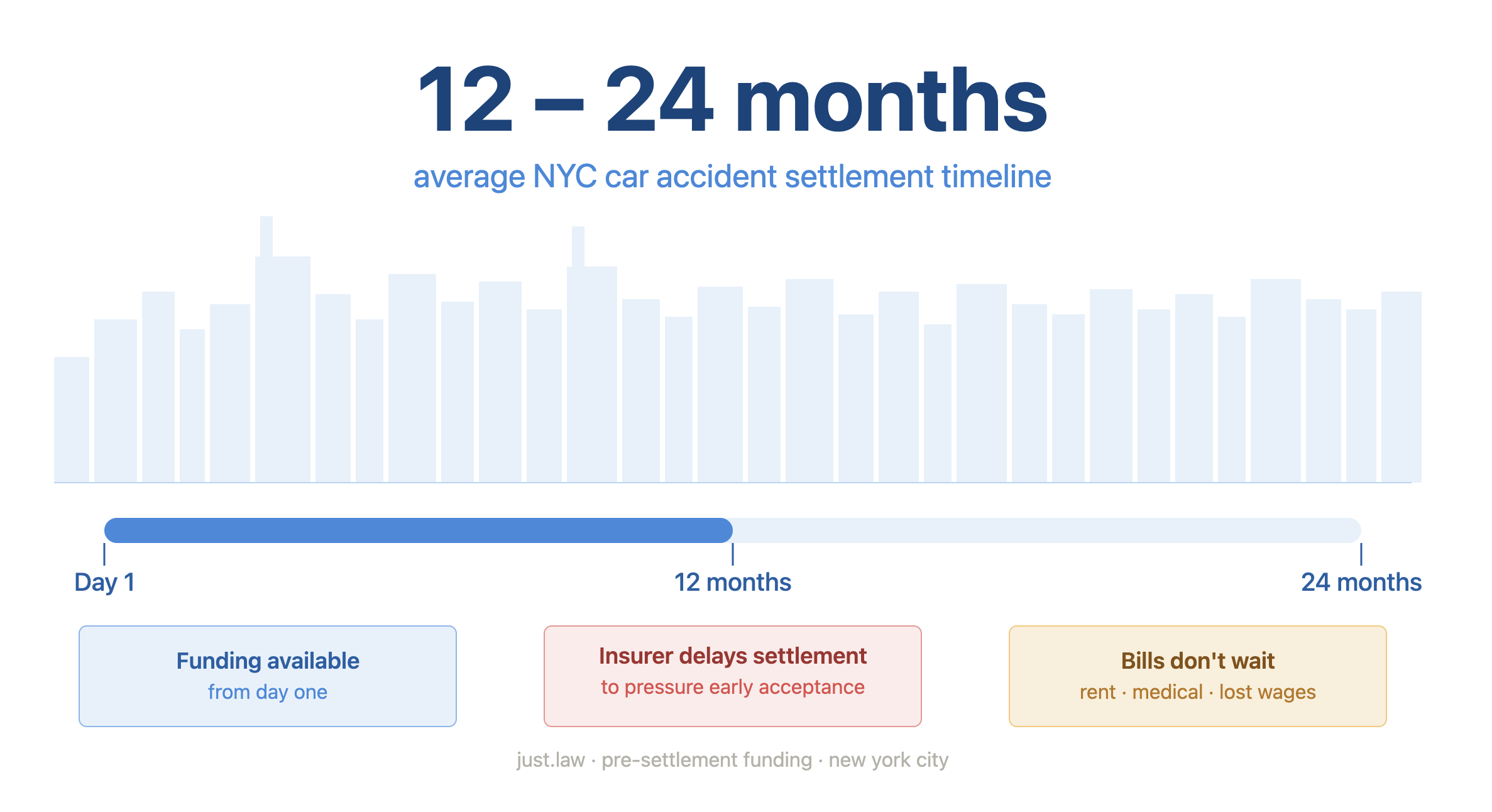
If you’ve been in a car accident in New York City and your case is still open, you already know the problem: the bills don’t wait for your settlement. Rent, medical copays, lost wages — those are due now. Your case might not resolve for another year, two years, or longer.
Pre-settlement funding exists to close that gap. This article explains exactly how it works, what it costs, and whether it makes sense for your situation.
What Is Pre-Settlement Funding?
Pre-settlement funding — sometimes called lawsuit funding or litigation funding — is not a loan. It’s a cash advance against the expected value of your future settlement or verdict.
Here’s the critical difference: if you lose your case, you owe nothing back. The funding company takes on the risk alongside you. If you win or settle, the advance plus a fee is repaid directly from the settlement proceeds before you receive your net recovery.
Because repayment is contingent on winning, you don’t need a credit check, a job, or collateral to qualify. The strength of your case is what matters.
How New York Car Accident Cases Work for Funding Purposes
New York is a no-fault insurance state, which means your own PIP coverage pays your initial medical bills and lost wages regardless of who caused the accident. But no-fault coverage has limits — typically $50,000. Once you exhaust PIP, or if your injuries qualify as a “serious injury” under New York Insurance Law § 5102(d), your case moves into full tort territory.
Serious injury in New York means fractures, significant disfigurement, permanent limitation of a body organ or member, or full disability for 90 days or more. Virtually every car accident case that reaches litigation in New York clears this threshold.
Once you’re in full tort, you have a claim for pain and suffering, lost earnings above PIP limits, and future medical costs. That’s where case value — and funding eligibility — becomes meaningful.
What Funders Actually Look At
When just.law evaluates a pre-settlement funding request, we’re looking at the same variables your attorney is focused on:
Liability. How clear is fault? A rear-end collision on the BQE with a police report is different from a disputed intersection accident with no witnesses. Clear liability means faster resolution and higher funding eligibility.
Injury severity. Soft tissue injuries settle, but they settle lower and sometimes slower than cases involving surgery, fractures, or permanent impairment. Documented surgical intervention is the strongest funding signal.
Treatment status. Active, consistent treatment tells funders the case is developing in the right direction. A treatment gap — weeks or months without documented medical care — is the single biggest negative factor in underwriting. If you’ve had a gap, you need an attorney before applying.
Venue. Where your case is filed matters significantly in New York. Brooklyn, Queens, the Bronx, and Manhattan each have distinct settlement patterns and jury profiles. The Bronx produces some of the highest plaintiff verdicts in the country. Brooklyn is consistently plaintiff-favorable. We account for venue in every underwriting decision.
Attorney retained. You should have an attorney before applying for funding. If you don’t have one, get one first. Cases without attorney representation are not eligible.
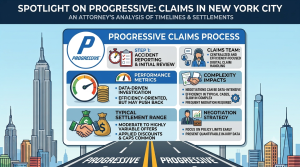
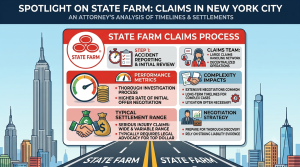
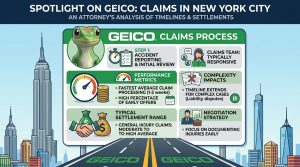
Insurer. GEICO, State Farm, and Progressive each have distinct settlement behavior patterns. The insurer on the other side of your case affects how long it takes and at what value it resolves.
What Funding Costs
Pre-settlement funding is not cheap. That’s the honest answer, and any funder who obscures it is not operating in your interest.
Funding is priced as a use-of-money cost over time, because the funder doesn’t know when your case will resolve. Rates vary by funder, case type, and advance size. The right question to ask any funder is: what is the total amount I will owe at repayment, and how does that change if my case takes 12 months versus 24 months?
At just.law, we show you that number upfront before you sign anything. Run your case through our estimator to see your eligibility range and what a funding advance would look like for your specific claim type and venue.
Is Funding Right for Your Situation?
Funding makes the most sense when:
- You have documented injuries and an attorney already retained
- You’re facing immediate financial pressure — rent, medical bills, basic living expenses — that would otherwise force you to accept a lowball settlement offer
- Your case is in a plaintiff-favorable New York venue with a credible liability position
- The alternative is settling early at a fraction of your case’s actual value
Funding does not make sense if your case is likely to resolve in 90 days or less, or if the advance would represent a disproportionate share of your expected net recovery.
If you’re unsure, the estimator will tell you where you stand. It takes two minutes and requires no personal information to get a preliminary range.
Next Steps
If you’ve been in a car accident in New York City and you’re represented by an attorney, you can apply or run a preliminary estimate at just.law. There’s no obligation and no credit check. We work directly with your attorney’s office to verify case details and fund quickly when a case qualifies.
Your settlement timeline is not something you can control. Your financial position while you wait is.